
Protecting Your Hardscape from Salt & Freeze Damage
Winter is the ultimate stress test for your outdoor living space. Between the relentless freeze-thaw cycle and the corrosive nature of de-icing salts, a single season can cause more wear than five years of summer use.
If you want to avoid cracking, spalling, and surface erosion, here is how to winterize your hardscape like a pro.
1. The Danger of the Freeze-Thaw Cycle
In many climates, the temperature fluctuates above and below freezing daily.
- The Problem: Pavers and natural stones are porous. When water seeps into these pores and freezes, it expands by roughly 9%, creating internal pressure that leads to hairline fractures or “scaling” (flaking of the surface).
- The Shield: The best defense is a high-quality breathable sealer. Sealing your patio or driveway creates a hydrophobic barrier that prevents moisture from penetrating the stone in the first place.
2. Choose Your Salt Wisely
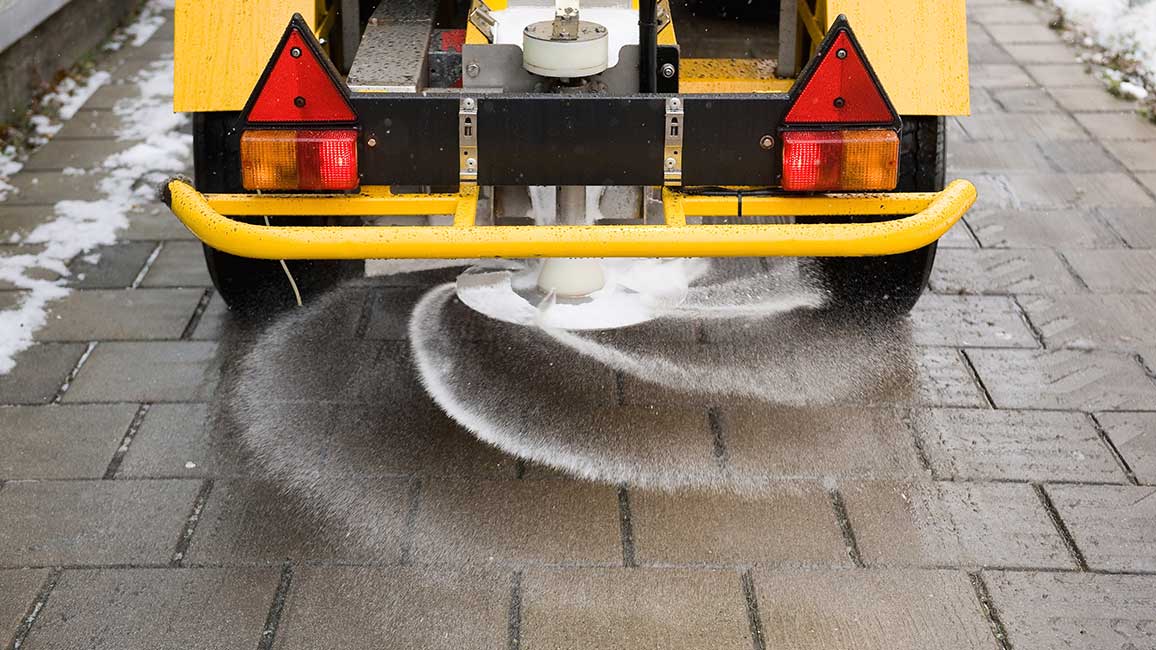
While rock salt (sodium chloride) is cheap, it is the worst enemy of your hardscape. It can eat away at the concrete paste that holds pavers together and kill surrounding vegetation.
- The Alternative: Switch to Calcium Magnesium Acetate (CMA) or Potassium Chloride. These are less corrosive and safer for both your stones and your pets.
- Pro Tip: Avoid using any de-icers on newly installed hardscapes (less than a year old), as the concrete is still reaching its full chemical maturity.
3. Use Traction, Not Chemicals
If you want to skip the chemicals entirely, reach for coarse sand or birdseed.
- Why it works: These materials provide immediate traction on icy surfaces without triggering chemical reactions or accelerating the freeze-thaw cycle. Plus, sand can be swept up in the spring and reused.
4. Adjust Your Plowing Technique
A heavy metal snow shovel or a low-hanging plow blade can leave permanent scuff marks or chip the edges of your pavers.
- The Fix: Use a shovel with a plastic or rubber leading edge. If you hire a plowing service, ensure they use polyurethane plow guards to prevent metal-on-stone contact.
5. Clear the Joints
Before the first snowfall, ensure your polymeric sand joints are intact. Gaps in the sand allow water to pool under the pavers, which leads to heaving when the ground freezes. A quick “top-off” of joint sand in late autumn can save you thousands in repairs come spring.
The Bottom Line
Prevention is significantly cheaper than replacement. A afternoon spent sealing and switching your salt brand can keep your “modern masterpiece” looking new for decades.
Prevention is significantly cheaper than replacement. A afternoon spent sealing and switching your salt brand can keep your “modern masterpiece” looking new for decades.