
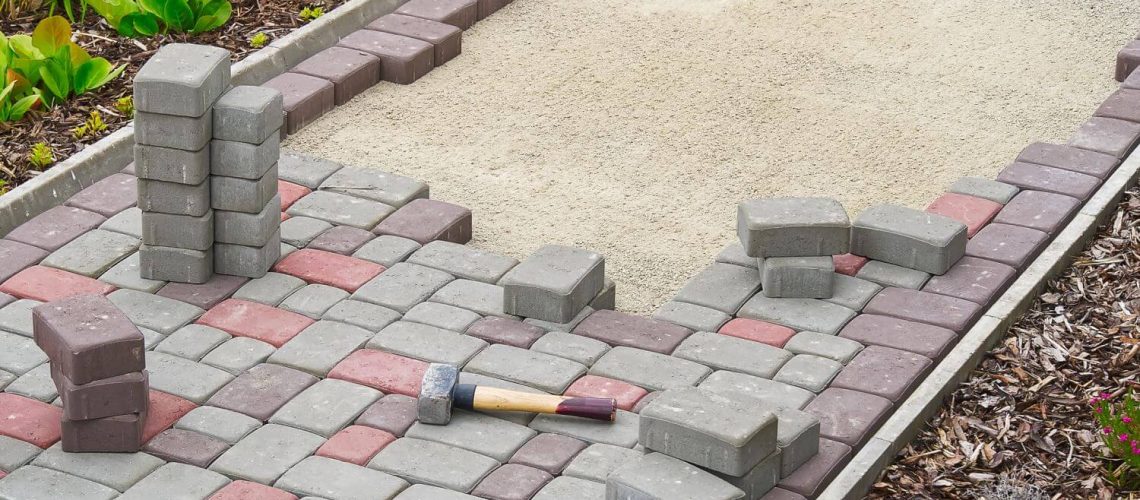
Common Causes of Patio Shifting & How to Fix It
A patio should be a stable oasis for relaxation, but over time, even the most beautiful hardscapes can develop dips, gaps, or “wobbly” stones. Shifting isn’t just an eyesore; it’s a tripping hazard that can lead to long-term structural damage if ignored.
Here are the primary reasons your patio might be moving and how to restore its solid foundation.
1. Inadequate Base Preparation
The most frequent cause of patio failure is a poorly constructed foundation. A professional patio requires a compacted gravel base typically 6 to 12 inches deep.
- The Problem: If the soil wasn’t excavated deep enough or the gravel wasn’t compacted in layers, the base will eventually settle under the weight of the pavers and furniture.
- The Fix: You must lift the affected pavers, add more crushed aggregate, and use a plate compactor to create a rock-hard surface before relaying the stones.
2. Poor Drainage & Water Erosion
Water is the greatest enemy of a healthy hardscape.
- The Problem: If your patio doesn’t have a slight slope (about 1/4 inch per foot) away from your home, water will pool and seep underneath. This washes away the bedding sand, creating voids that cause pavers to sink.
- The Fix: Minor issues can be fixed by re-grading the area to encourage runoff. For severe cases, installing a French drain or channel drain is necessary to redirect water away from the foundation.
3. The Freeze-Thaw Cycle
In colder climates, moisture trapped in the soil under your pavers is a ticking time bomb.
- The Problem: When this water freezes, it expands, pushing pavers upward—a process known as frost heave. When the ice melts, the pavers rarely settle back into their original perfectly flat positions.
- The Fix: Ensure your base uses free-draining gravel rather than “stone dust,” which holds onto moisture and exacerbates heaving.
4. Missing or Damaged Edge Restraints
Think of edge restraints as the “picture frame” that holds your patio together.
- The Problem: Without a rigid border—like plastic, metal, or concrete curbing—the pavers will naturally creep outward over time. This creates wide gaps that allow weeds to grow and sand to wash out.
- The Fix: Install or replace heavy-duty edge restraints secured with 8- to 10-inch steel spikes to lock the perimeter in place.
5. Joint Sand Loss
The sand between your pavers isn’t just for looks; it provides the lateral friction that keeps stones from sliding.
- The Problem: Over time, wind and rain wash away standard sand.
- The Fix: Clean out the joints and sweep in polymeric sand, which hardens when misted with water to act like a flexible glue.
Don’t Wait for a “Quick Fix” to Fail
If your patio is significantly uneven, simply “adding more sand” on top is a temporary band-aid. True restoration requires addressing the base and drainage issues.